Showing posts with label recommended reading. Show all posts

7/15/12

Three books, three lessons


I haven't been posting to this blog very much recently because I've been very, very busy. Among other things, I've been writing (I'll post about that IY"H soon) and reading--reading to my kids, parallel to my kids, and on my own. Notably, I've recently read several books that are "message books"--books with a sincere moral message that the author wants readers to absorb. While many such books come across as heavy-handed, these do not.

HIGH SCHOOL AND ABOVE Orson Scott Card (as a practicing Mormon, he often introduces ethical dilemmas and messages into his books) is most famous for his first novel, Ender's Game. I recently read the first sequel Speaker for the Dead, and was sucked in right away by the introduction by the author. (In it, Card says that one of his motivations for writing the book was because he wanted to show a central character who is NOT an adolescent, or a drifter, or any other aloof, single man on the fringe of society who usually stars in sci-fi novels. Rather, he portrays a man ready to create a family, who really wants to build bridges between the members of communities.)

Speaker for the Dead follows the hero of Ender's Game to the age of 35--although 3000 years have passed, he hasn't aged because he has spent so much time travelling, teaching people insights into the behavior of the dead, allowing people to walk in the shoes of people before judging them (as it says in Pirkei Avot/The Ethics of the Fathers). This is his personal tikkun (rectification of error) following his (SPOILER ALERT) near-destruction of the species of Buggers at the climax of the last novel. Now, Ender's sister and companion, Valentine, is expecting her first child. Her travels are over, and he realizes he wants his to end, too. But he has one last mission--to find out why members of another alien race have started killing the scientists (actually xenologists--like anthropologists, but studying aliens instead of humans) who have befriended them and studied them.

This novel provides a nuanced discussion about a new kind moral relativism--not that right and wrong are relative, but that our ability to judge them is. The story is a little focused on one side of the argument, and I was able to guess the mysterious cause of the aliens' behavior right off--but that might be because I 1) am a writer myself and 2) hold a master's degree in Anthropology. However, I really enjoyed the book and it would be an excellent stepping off point for discussion in a classroom, book club, or around the dinner table.


MIDDLE GRADE Vivian Vande Velde's middle-grade novel, Three Good Deeds, tells the story of Howard, a rowdy boy who spends several months as a goose. Howard's transformation is at the hands of the local witch, who feels he is a selfish child more interested in his own entertainment than the needs or wants of others. The only way out of the curse is for Howard to complete three genuinely good deeds.
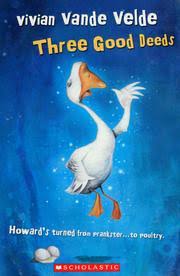


Three Good Deeds uses fantasy, a charming although obnoxious anti-hero, and plenty of droll humor to draw the audience (ages 8 and up) into the story. Despite the light treatment, the message--that a person should be a giver and not a taker--is beautifully interwoven into the text. Warning: The end is a bit of a tear-jerker for softies (it mentions chessed shel emes).


PICTURE BOOK Paul Budnitz's The Hole in the Middle takes a fantastic approach, as well, to teach its lesson. Morgan quite literally has a hole in his middle. He tries to fill it up with superficial and self-centered pursuits. However, it only shrinks when he does chessed (kindness) for his friend Yumi.


The fanciful, metaphorical style of this book ALMOST overpowers the moral. My 3 year old and not-quite 5 year old children laughed at the story, but when I asked the older of the two about the message, she had indeed absorbed it. I'm wondering if the wackiness of the set-up might make the book so memorable, that even if a younger child doesn't quite understand the message at the time she reads it, she'll draw on its memory to guide her after she reaches a stage where it's no longer over her head.


I'm highlighting these books because they definitely represent one of the directions I want to go with my writing--using speculative fiction to explore subjects that might not appeal to children or teens if approached more directly.

6/28/12

What will your children be reading this summer?

I just read an interesting opinion piece in the New York Times by Claire Needell Hollander, a middle school teacher. Her article explains that while young, inexperienced readers should go ahead and read whatever they want during the summer, so long as they read, maturing readers of 10 years old and up will benefit more from selective reading. Ms. Hollander's preferred books build "verbal knowledge (an increase in word recognition) and world knowledge (an increase in understanding about the world around them)."


Ms. Hollander believes that middle- and high-schoolers should not self-select their summer reading. She believes that some students do well with the traditional recommended reading list (heavy on literary novels recognized as "classics"), but she prefers to narrow the students' selection by genre to ensure they are getting the literary diet that will enhance their academic health. Her top picks? High-quality but developmentally appropriate non-fiction. Most revolve on serious moral issues--child soldiers, the bombing of Hiroshima, and the like.


I believe Ms. Hollander when she says that studies have shown that students who read "high quality" material over the summer do better than those who completely self-select. My problem is that this is too short-sighted a goal. We don't just want successful students, we want to make life-long learners who will turn to books for information as well as pleasure. 


So, yeah, a kid who (her comparison) reads The Hunger Games might in the short term learn less words and information that the kid who reads The Red Badge of Courage. But if the kid who read The Hunger Games enjoyed it and develops a real pleasure in reading, they'll might read more as a 30 or 40 year old than the kid who read The Red Badge of Courage and gritted his teeth through the whole thing (not because it's a bad book, but because it was not to his taste). There was a wonderful post on the Nerdy Book Club recently by Sasha Reinhardt about how her low-brow love of The Babysitters' Club series helped develop her lifelong devotion to books. 


And while studies have supported (as mentioned in previous blog posts) that non-fiction appeals to many children who normally don't identify themselves as book-lovers, the serious tone of the books Ms Hollander lists will turn-off many children. The graphic novels Kampung Boy and American-Born Chinese may not appeal to her, but they certainly introduce serious subjects, geographic detail, and lots of new vocabulary in a format that might appeal to reluctant readers more than Francesco D’Adamo and Ann Leonori's Iqbal  or John Hersey's Hiroshima.


6/3/12

Summer reading


Boy and girl reading.
image from ClipArt ETC


I'm not a Pinterest fan, but here's a wonderful post by a fellow blogger at the Nerdy Book Club that gives super projects to make summer reading fun in your family. 

Summertime is the perfect time to develop a love of reading in your kids. Kids can select their own reading material based on their own interests rather than what their teachers think they should be reading. They can also read at their own pace without meeting a deadline. If your family (or your child's camp bunk) goes on an interesting outing, they can select books that dovetail nicely with the subject matter.


Many libraries have summer book clubs that your kids can join. Just go see the children's librarian for details at your neighborhood branch.

5/9/12

Has your child received their free Hebrew-language picture books, yet?

The division of the PJ Library that sends Hebrew language books to the children and grandchildren of ex-patriot Israelis in the U.S.--Sifriyat Pijama B'America (SP-BA)--is now accepting new families to join the program. Children will receive monthly books in Hebrew, often tied to events on the Jewish calendar. The first year of the program was a success, and its leadership has launched a new website in English that includes many of the features in the Hebrew website. Follow this link to check out the improved site and sign up: http://www.sp-ba.org/.

5/7/12

When Reading Books Becomes a Dangerous Habit

Young Boy Sitting with Dog Reading
Image from http://etc.usf.edu/clipart/69800/69898/69898_boy-read.htm. That little reader looks so innocent, doesn't he? Little does he know the life of addiction that awaits him!


I just read a hilarious article on Tablet by Marjorie Ingall about how to encourage your children NOT to read. My favorite hint is number one:

Do not set aside 15 minutes to read each day.If you set aside 15 minutes to read each day, at bedtime or before bath, you will turn reading together into a habit. You know what kind of people have habits? Junkies.
This is actually something we currently struggle with in the Klempner household. We used to have just one juvenile book delinquent (you know, the type of kid who smuggles literature into their bunks well past bedtime), but we have recently acquired a second, and a third appears to be close on his heels.  Homework is no longer getting accomplished by my second son in the prompt, no-nonsense way I used to love--he's now forgoing his nightly worksheets, Hebrew fluency practice and spelling drills in favor of reading Tintin, Geronimo Stilton, and Stories of Tzaddikim.

My eldest son will chose to read over eating. Sometimes even over eating pizza. 
It's probably my fault. I used to one of those slackers who read novels instead of doing my homework. And now, I read instead of doing dishes or scrubbing the bathroom. And sometimes--truth be told--even instead of writing. Maybe I need to re-read Marjorie Ingall's article.

3/13/12

Great post on read alouds

I subscribe to get regular updates from the website "Beautiful Books." Today's guest post, by a speech-language pathologist, describes how to maximize the efficacy and enjoyment of read-alouds. Read her excellent advice here.

3/12/12

How to Increase Literacy Through Changing the Genre of Classroom Materials

When I said, "change genre" in the title of this post, I meant it literally. Many advocates of reluctant readers have in the past mentioned that U.S. school rely too heavily on fiction--especially certain kinds of fiction--to teach students. Studies of boys' reading preferences have pointed out that boys frequently prefer non-fiction selections, but that their schools often rely on fiction. Students sometimes complain about the value of reading short stories and novels in the long term. Are they really going to need to know the major characters and plot points of Lord of the Flies, Catcher in the Rye, or Moby Dick as adults?

Now a study in New York City schools described in today's New York Times online adds evidence that increasing the use of non-fiction in classrooms has concrete benefits. Students using an experimental--mostly non-fiction--curriculum scored better on reading comprehension assessments. They also internalized the content of those pieces sufficiently to increase their scores on tests of social studies and science knowledge. The NY Times article mentions that this is particularly useful, as classrooms have generally reduced the amount of time they spend on those subjects in an attempt to improve students' scores on standardized test that focus on reading and math skills. Interestingly, the students that participated in the study were largely from lower socio-economic backgrounds.

The study has its opponents, and I would never say fiction should be tossed out of schools (I love novels! I love short stories!), but I hope that this study will prompt school districts to reconsider their current balance of classroom materials.


12/26/11

Great link to a book review site for those of us who want a good clean book to read

I've just discovered this fabulous resource, the Library of Clean Reads, a blog by Laura Fabiani.

http://libraryofcleanreads.blogspot.com/p/about-us.html

There are a few other similar sites out there, most of them by LDS women. However, this one has no references to Mormon or Christian beliefs and doesn't review religious books. Definitely worth checking out.

10/31/11

And even more great bedtime reads!

While reviewing my site stats, I've noticed that lots of people want bedtime selections for their little sweethearts (or maybe for their little hellions...maybe THAT'S why they're so anxious to get them to sleep). Here are some new discoveries in the Klempner household.

Product Details
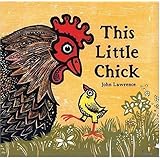
This Little Chick by John Lawrence tells the adventures of a wacky little chick who would rather speak the languages of the other barnyard animals than that of his family. The woodblock print illustrations are just fantastic, and my children laughed at the chick's antics. Ages 18 mo - 5 years.

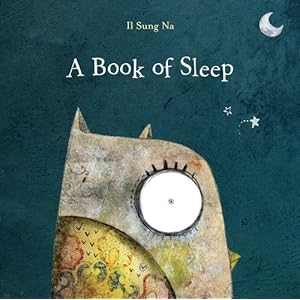
A Book of Sleep
A Book of Sleep by Il Sung Na has to be one of the most dreamily illustrated boardbooks I've ever seen. A wakeful owl watches over sleepy animals of all types until day arrives. The language is simple and lulling, and the pictures are filled with fanciful whorls and flowers and vines faintly sketched against the blocks of color. My favorite illustrations are those of the giraffe using the cloud as a pillow and the penguins huddled together. Perfect for ages 18 mo through 4 years.

The next Jewish holiday, a month and a half away, will be Chanukah. Here's a fun story to celebrate the holiday:

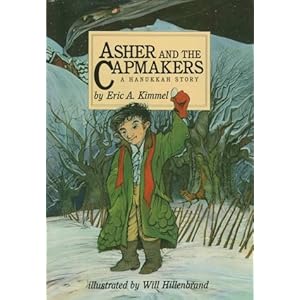
Asher and the Capmakers: A Hanukkah Story

Asher and the Capmakers by Eric Kimmel isn't precisely a folktale. This is a whimsical, darkly humorous story--about the mysterious adventure a boy has when he runs to the neighbor to borrow an egg for the family's latkes--created by interweaving folktales from many traditions. I'd recommend this one for children 5 to 10 years old. It's a little scary for the youngest readers. Also, some families might be uncomfortable with the mention of fairies and their magical caps.

8/21/11

Another picture book about children's safety issues

Yoni Ploni Never Talks to Strangers!
A few weeks ago, I reported about Yoni Ploni Never Talks to Strangers, a book written about personal safety specifically for children in the Jewish community. (See the original post here.) This book is now available through the Israel Book Shop website.

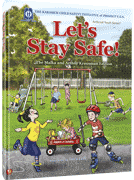
Another book on this topic has just been released: Artscroll's Let's Stay Safe. This book had a wider subject area than Yoni Ploni..., as it covers such topics as crossing the street, bicycle safety, etc. as well as stranger safety. You can find Let's Stay Safe at Jewish bookstores and online on the Artscroll website.

8/8/11

How do we mourn?


My husband says one of the reasons we can't truly mourn the loss of the Beis HaMikdash (the Holy Temple in Jerusalem) on Tisha B'Av is because we don't understand what we are missing. We never saw the Temple with our own eyes, and the coming of Moshiach will be so miraculous, we can't even imagine it. Books can help us to better appreciate the loss of the Beis HaMikdash and picture the future end to our exile.

Leah Braunstein Levy's The Waiting Wall, Genendel Krohn's When We Left Yerushalayim, and Rabbi Fishel Schachter's Yibaneh HaMikdash, can help children identify with the gravity of Tisha B'Av and hope for the redemption. Moreover, there are a number of excellent books and DVDs (such as Chaim Shmuel Friedman's) which elaborately describe the Beis HaMikdash's appearance and function, and these can help us too.

I'd also recommend David Shapiro's The Promise of G-d, which depicts a possible scenario for the coming of Moshiach.

You could even use this as a writing exercise:
Simply sit on the floor and contemplate what will be different when Moshiach arrives, when there is no more war. Xenophobia and illness--gone! Wealth distributed fairly! The RAMBAM writes that there will no envy or competition, either. Imagine a world united to the service of G-d and happy in it. Write it down, believe in it. Then think about the gap between that future time and what we have now. Better yet, think about one thing you can do to bring that beautiful future closer.

7/26/11

The Stuff You Find When Cleaning Your Kid's Room

Looking to make storytime more interactive with your kids? I was reshelving books in my kids' room today, and came across this book:

Fox's Best Trick Ever

This "We Both Read" book is one of a series put out by Treasure Bay. What sets these charming books apart is that the books are meant for young readers to share with an adult. Each pair of facing pages contains a page on the left with adult-level words, and a page on the right with leveled vocabulary perfect for the child to read. The parent/teacher and child work together to tell the story, building it jointly. It really enhances the bonding element of bedtime reading, and that coupled with the ease of reading the "kids" page often motivates the reluctant reader.

(You can take turns reading a more traditional text--I find the strategy highly effective with my newest reader at home--but these books make it EASY.)

There are fiction and non-fiction titles in the "We Both Read" series, many multicultural selections, and levels K-3. For more information, follow the link below.

http://www.webothread.com/server/TreasureBay/website/main/scripts/default.asp

7/24/11

Around the World...in books!

This week, the Family Camp that I organize is following the theme "Around the World." Here are a few books I recently borrowed from the library that definitely fit right in.

The Hatseller And The Monkeys

Baba Wague Diakite's The Hatseller and the Monkeys retells the folktale most Americans recognize from Caps for Sale. In this Malian version, we are given a wonderful glimpse into African village life, as well as a moral for the wacky tale. Ages 2-7.

Kampung Boy
The Far East is where the graphic novel first became most popular, and in Southeast Asia, one of the most popular authors of this format is Lat. Lat portrays his boyhood in a small village in Malaysia, circa 1950 in Kampung Boy. I adored both the humor and the loving nostagia Lat imbues the book with. Ages 7 through adult.

The Little Prince Graphic Novel
Many people grew up reading The Little Prince. Joann Sfar recently recreated Saint-Exupery's French classic in the graphic novel format. The experiences reading the two are very different--why not read both and compare?
Age 9 and up.

7/22/11

Jewish Picture Book Aims to Protect our Children from Harm

http://matzav.com/how-do-we-protect-our-children

Safety is--for obvious reasons--a high priority in our community right now. A friend recommended the book described in the link above. The article suggests that it introduces strategies to children so they can avoid being harmed by adults around them, yet approaches the subject in a way that is appropriate in our community.

In the comments section of the article, it makes clear that this book focuses on interactions with malicious strangers. Statistically, most children who are harmed (lo aleinu) are harmed by people they know. The next printing of the book will have this topic added.

Yoni Ploni… Never Talks to Strangers can be acquired directly from the author by dialing 347 393 3670.

The book has endorsements that have led me to place the link here, but I have not read the book myself yet. If you have and have any feedback to share, please feel free to add a comment below.

7/5/11

Good clean reads

A friend asked me about good clean books (obviously, other than those from reliable Jewish publishers) to share with her preteen and teenage kids during the summer. Here are just a few great books for the (Jewish) kid, all pre-approved by moi. However, you should ALWAYS skim books before letting your kid read them. Even if they are "kosher," they might not be at the right reading level, for example.

(And you do have to take the following into account:

I allow my kids to read books by non-Jews and about non-Jewish subjects--which some frum moms might disapprove of--and I do allow my kids to read about somewhat controversial topics, as long as they are developmentally appropriate. I'm also a big fan of all those treife animals some people shun--I just don't eat them.

However, I ditch books with strong language, completely "un-tznua" romantic situations, excessive violence, flagrant racism or xenophobia, or that promote avodah zara, movies or television.

...And, yes, that includes Disney!)

These books are for kids 8 and up:

The Hobbit (Tolkein)
The Courage of Sarah Noble (Dalgliesh)
The Stories Julian Tells (Cameron)
Binky series of graphic books (Ashley Spires)
Hereville: How Mirka Gets her Sword (Deutsch)
The Rabbi's Girls (Hurwitz)
Baseball Fever (Hurwitz)
The Travels of Benjamin of Tudela (Shulevitz)
Fat Men from Space (Pinkwater)
Fat Men from Space
Bobby vs. Girls (Accidentally) (Lisa Yee)
all Henry Huggins books (Cleary)
Ramona, Ramona the Pest, Beezus and Ramona, Ramona the Brave, Ramona and her Mother, Ramona and her Father (Cleary)
Sarah, Plain and Tall (MacLachlan)
Little House in the Big Woods and Farmer Boy (Wilder)
There's a Boy in the Girls' Bathroom (Sachar)
Sadako and the Paper Cranes (Coerr)
The Princess Tales, Volume I (Levine)
A Single Shard (Park)
The Thief Lord (Funke)


And these are for age 12 and up:

Dealing with Dragons (Wrede)
Searching for Dragons (Wrede)
Tripods trilogy (John Christopher)
The Pool of Fire
Homecoming (Voight)
The Eye, the Ear and the Arm (Farmer)
The Giver (Lowry)
The Cay (Taylor)
Treasure Island (Stevenson)
all the Little House books not listed above
Island of the Blue Dolphins (O'Dell)
Tuck Everlasting (Babbitt)
Un-Lun-Dun (Mieville)
Bud, Not Buddy (Curtis)


For age 15 and up:

Sorcery and Cecilia (Wrede and Stevemer)
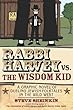
Rabbi Harvey vs. the Wisdom Kid (Scheinkin)
Rabbi Harvey vs. the Wisdom Kid: A Graphic Novel of Dueling Jewish Folktales in the Wild West
The Blue Sword (McKinley)
The Graveyard Book (Gaiman)
Dealing with Dragons (Wrede)
Catherine, Called Birdy (Cushman)
The Folk Keeper (Billingsley)
The Martian Chronicles (Bradbury)
I Robot (Asimov)
1001 Arabian Nights
When I Was a Slave: Memoirs from the Slave Narrative Collection (Norman R. Yetman, ed.)
A Wizard of Earthsea (Le Guin)
Things Not Seen (Clements)


P.S. There are many other wonderful books out there...please share your "kosher" reading recommendations for the 8+ crowd in a comment below! Also, don't assume other books by the same authors as the above are okay. In many cases, they are most definitely NOT.

6/20/11

Books about friendship

In one of those bizarre synchronicity moments you sometimes have at the library, my family borrowed a slew of books all about friendship at our visit yesterday (the first three are by Mo Willems, who is wonderfully engaging). I'll briefly review each and add several other suggestions on the topic at the end.

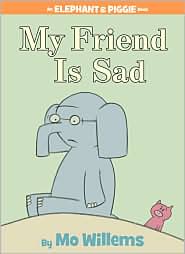
My Friend is Sad

My Friend Is Sad (Elephant and Piggie Series) by Mo Willems: Book Cover
A wonderful book for new readers to read on their own about how to comfort a friend feeling down.


City Dog, Country Frog

Teaches how to build a friendship and how to cope with loss of a friend. A charming, even moving read and a stylistic departure for the author Mo Willems.

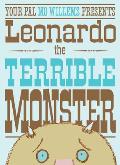
Leonardo the Terrible Monster


Friendship turns out to be the great purpose in life for Leonardo, a monster unable to scare anyone.

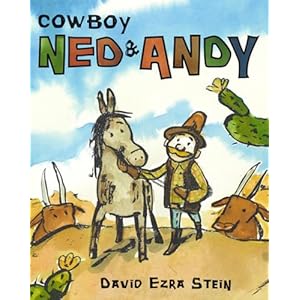
Cowboy Ned & Andy, by David Ezra Stein

Cowboy Ned & Andy (Paula Wiseman Books)
Andy the horse loves his owner, Ned, so much that he wants to give him a birthday cake in honor of Ned's big day. But what does Ned really need?


OTHER GREAT "FRIENDSHIP" SELECTIONS:

the Mimmy and Simmy books by Yaffa Ganz,
the Toon Book Stinky,
the classic series commencing with Frog and Toad are Friends,
That's What a Friend Is by P.K. Hallinan,
Little Bear's Friend by Else Holmelund Minarik,
A Friend for King Amadou by Robert McKissack,
Dog Blue by Polly Dunbar,
Winnie the Pooh books,
Sheila Rae, the Brave and almost any book by Kevin Henkes,
the magical Charlotte's Web,
anything about Helen Keller and Annie Sullivan,
As Good As Anybody by Richard Michelson
...and for older readers Louis Sachar's amazing The Boy in the Girls' Bathroom,
Beth Firestone's Candles in My Window,
The Sea of Trolls trilogy,
Sorcery and Cecelia,
The Chosen,
and Patricia Wrede's Dealing with Dragons.

Please Share more "Friendship" books for children--fictional or not--below!